
How to Handle Multiple Offers in Real Estate: A Practical Guide from the Trenches
I still remember my first bidding war—three buyers, all demanding updates every hour, and me, sitting at my kitchen table at 11 PM trying to figure out if I was doing this right. Multiple offers sound like a dream scenario, and they are, but only if you know how to manage them without losing your mind or crossing ethical lines.
After years of navigating these high-pressure situations, I’ve learned that success in a bidding war isn’t about luck. It’s about having a system, communicating clearly, and keeping your cool when everyone else is panicking.
Let me walk you through what actually works.
Contents
- 1 Understanding the Difference: “Highest and Best” vs. “Best and Final”
- 2 The Real Winner Isn’t Always the Highest Price
- 3 Scripts That Actually Work (Without Sounding Robotic)
- 4 Navigating the Legal and Ethical Minefield
- 5 Managing the Administrative Chaos
- 6 Advanced Tactics: Countering the Top Two
- 7 Handling Special Situations
- 8 What Your Seller Needs to Know Upfront
- 9 Common Questions I Get Asked
- 10 The Bottom Line
Understanding the Difference: “Highest and Best” vs. “Best and Final”
These terms get thrown around like they’re interchangeable, but they’re not. Getting this wrong can cost your seller thousands or make buyers walk away.
What “Highest and Best” Really Means
When you call for “highest and best,” you’re essentially saying: “Show me what you’ve got.” It’s a structured deadline that forces buyers to put their cards on the table, but there’s still an implied flexibility. I might still entertain minor adjustments after reviewing offers.
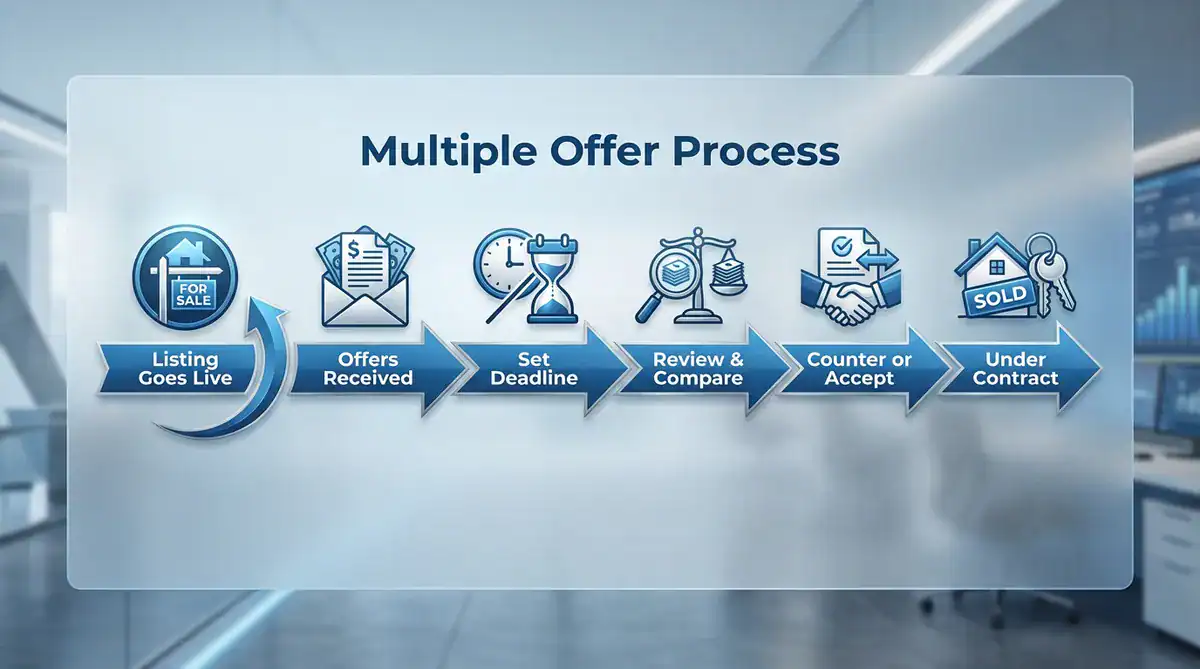
I typically use this approach when we have strong interest but I’m not quite sure we’ve hit the ceiling yet. The key is setting a clear deadline—usually 24 to 48 hours—to create urgency without rushing people into bad decisions.
When to Use “Best and Final”
“Best and final” is different. This signals the absolute end of negotiations. No more rounds, no more tweaks. It’s the closing bell.
I reserve this for situations where we’ve already had one round of counters and buyers are getting fatigued. Trust me, if you drag this process through three or four rounds, people start dropping out. I’ve seen buyers walk away from their dream home simply because they were exhausted by the process.

The Real Winner Isn’t Always the Highest Price
Here’s something that surprises new agents: the highest offer often isn’t the best offer.
Last spring, I had a seller receive seven offers. The top price was $850,000, but it was contingent on the buyer selling their condo, had a financing contingency, and requested $10,000 in closing cost assistance. The sixth-highest offer was $825,000, all cash, no contingencies, ten-day close.
Guess which one we took?
What I Actually Look At
When comparing offers, I create a simple spreadsheet—nothing fancy, just clear columns that help my seller see the real picture:
- Net Price: The offer minus any concessions or closing costs they’re asking for
- Financing Strength: Cash beats conventional, conventional beats FHA/VA in most cases
- Contingencies: Every contingency is a potential exit door for the buyer
- Earnest Money: A higher deposit shows commitment and gives us protection if they bail
- Timeline: Does their closing date work with my seller’s moving plans?
Sometimes a $25,000 lower offer is actually worth $30,000 more when you factor in risk and timeline.
Scripts That Actually Work (Without Sounding Robotic)
Communication is where most agents stumble. You can’t go dark on buyer agents—that creates suspicion and resentment. But you also can’t reveal too much without violating ethical rules or state laws.
My Standard Multiple Offer Notification
Here’s what I actually say to buyer agents:
“Hey , I wanted to give you a heads up that we’ve received multiple strong offers on [Property Address]. My seller is asking all interested parties to submit their highest and best offer by [Day] at [Time]. I’d encourage your buyers to think about not just price, but also their strongest terms on closing date, contingencies, and any flexibility they have. Let me know if you have any questions.”
Notice what I’m not doing: I’m not revealing specific prices, terms, or the number of offers unless my seller explicitly approves it and local laws allow it.
Keeping Everyone Informed (Without Oversharing)
Transparency builds trust, but you have to know the boundaries. In my state, I can confirm that multiple offers exist, but I cannot share the details of a competing bid without written permission from that buyer. Some states are different, so check your local regulations.
One thing I always do: I confirm receipt of every offer within an hour. A simple “Got your offer, thanks. We’re reviewing all submissions and will have a response by [time]” goes a long way.

This is where good intentions can get you in trouble. The rules exist for a reason, and I’ve seen agents face serious consequences for crossing lines they didn’t even know existed.
The “Buyer Love Letter” Problem
You know those heartfelt letters from buyers about how they’ll raise their kids in this home and love the garden? They’re risky.
Fair housing experts warn that these letters can introduce bias based on family status, race, religion, or other protected characteristics. I advise my sellers to make decisions based solely on the objective contract terms. If a seller insists on reading letters, I document that they understand the fair housing implications.
Never, Ever Fake a Bidding War
I’ll be blunt: if you tell buyers there’s a bidding war when there isn’t one just to drive up the price, you’re committing fraud. State real estate commissions take this seriously. I personally know an agent who lost their license over this.
Every offer you reference must be legitimate and in writing. Period.
The Appraisal Gap Strategy
Here’s a scenario I see constantly: bidding war drives the price $50,000 over list, but the house won’t appraise that high. If the buyer doesn’t have an appraisal gap coverage clause—meaning they’ll pay cash for the difference—that high offer is worthless.
I always ask: “If the appraisal comes in at list price, can your buyer cover the gap?” That question alone has saved me from multiple failed transactions.

Managing the Administrative Chaos
When you’re juggling five or seven offers, organization becomes your competitive advantage. I’ve refined my system over the years, and it’s pretty simple.
My Offer Management System
I use a shared spreadsheet with my seller where I track:
- Offer number (I assign each one a number as they come in)
- Buyer agent and contact info
- Key terms at a glance
- My notes on financing strength
- Seller’s ratings or questions
This lets us compare side-by-side during our review call. No mental math, no confusion about which offer had which terms.
The Role of Marketing Technology
Let me be honest about something: multiple offers don’t happen by accident. They happen because you’ve created demand.
The listings that generate bidding wars are usually the ones with professional photos, compelling descriptions, and strong online presence. I’ve found that investing time in the front end—getting the marketing right—makes the backend negotiation process much smoother because you have actual leverage.
Quality marketing materials help establish the property’s value in buyers’ minds before they even make an offer, which tends to result in stronger initial bids.
Advanced Tactics: Countering the Top Two
Sometimes I don’t do a broad “highest and best” to everyone. Instead, I identify the top two offers and create a mini-competition.
How This Works
After the initial round, I might say to the top two buyer agents:
“You’re one of our finalists. The seller is willing to accept immediately if you can remove your appraisal contingency and increase your earnest money to 3%. Can your buyers do that?”
This micro-negotiation often yields better results than another full round with ten parties. It’s faster, creates urgency, and focuses on the buyers who were already close.
But here’s the catch: I only do this when I genuinely have two strong offers that are neck-and-neck. Never create a false sense of competition.
Handling Special Situations
Real estate would be easy if every offer was straightforward. It never is.
Escalation Clauses
An escalation clause says: “I’ll pay $5,000 more than the highest competing offer, up to $600,000.”
These can be useful, but they require careful handling. You must be able to prove the existence of the competing offer to trigger the escalation. I provide a redacted copy of the competing offer showing the price but removing personal information.
Also, make sure the math works. If the escalation cap is only $2,000 above their initial offer, it’s basically meaningless.
Accepting an Offer Before the Deadline
Can you accept a “too good to refuse” offer before your stated deadline? Yes, if your seller wants to.
But you must immediately notify all other interested parties that the property is under contract. Letting them continue preparing offers when you’ve already accepted one is misleading and can create legal issues.
I’ve only done this twice in my career, and both times it was a significantly above-market all-cash offer with a seven-day close. In those cases, waiting made no strategic sense.
What Your Seller Needs to Know Upfront
I have a conversation with every seller before we list about what multiple offers actually mean.
Setting Realistic Expectations
“The highest price doesn’t automatically win” is the first thing I explain. We discuss the risks of appraisal gaps, the value of strong financing, and why a cash offer might be worth taking even if it’s lower.
I also prepare them for the emotional roller coaster. Buyers get anxious, buyer agents get pushy, and things can feel chaotic. My job is to keep everything organized and present them with clear options.
Documentation Is Your Friend
I keep detailed records of every offer, every communication, and every decision. If a buyer later claims we didn’t handle their offer properly, I have timestamps and notes proving otherwise.
This might sound paranoid, but I’ve had exactly one complaint filed against me in 12 years, and my documentation got it dismissed immediately. It’s worth the extra effort.
Common Questions I Get Asked
“Can I tell other buyers what the highest offer is?”
It depends on your state and your seller’s permission. In my state, I can with written consent from both the seller and the buyer whose offer I’m disclosing. I rarely do it because it can create resentment and doesn’t always help. Always check your local laws first.
“What if none of the offers are good enough?”
Then you counter or reject them all. Your seller is never obligated to accept an offer, even in a multiple offer situation. I’ve had sellers reject all offers and relist with adjusted pricing or terms.
“How do I stop buyers from writing love letters?”
I include language in my listing that says, “Seller will not consider buyer correspondence or letters. Decisions will be based solely on contract terms.” This protects everyone.

The Bottom Line
Handling multiple offers well is what separates experienced agents from the rest. It’s part strategy, part ethics, part organization, and part communication.
The agents who succeed in these situations are the ones who:
- Set clear expectations and deadlines from the start
- Communicate consistently with all parties
- Evaluate offers based on the complete picture, not just price
- Document everything religiously
- Stay calm when everyone else is stressed
Is it stressful? Yes. But it’s also an opportunity to demonstrate your value and professionalism. When you navigate a bidding war smoothly and get your seller to closing with the best possible terms, that’s when you earn those referrals and build your reputation.
And honestly? After you’ve done a few of these, the chaos starts to feel manageable. You develop your rhythm, your scripts, and your system. That first bidding war I mentioned? I barely slept. Now I can handle seven offers in my sleep.
Well, almost.
Managing multiple offers requires organization, clear communication, and attention to detail from start to finish. Having the right tools in place—from professional marketing materials that generate demand to systems that help you stay organized—makes all the difference in these high-pressure situations.
